Design Style & Aesthetic
Kitch Editorial Team
How Custom Cabinetry Makes Small Spaces Work Harder
How Custom Cabinetry Makes Small Spaces Work Harder
Some of the most useful spaces in a home are not large rooms. They are the smaller areas near an entry, beside a fireplace, along a hallway, or tucked into an unused corner.
These spaces often collect the details of everyday life. Shoes gather near the door. Books and personal objects compete for space in the living room. Glassware ends up stored far from where it is used. An empty wall feels unfinished, but a freestanding piece of furniture never seems to fit quite right.
Custom cabinetry can turn these overlooked areas into practical, finished parts of the home. The goal is not to add storage to every available wall. It is to understand what the space needs to do and design around the way the household actually uses it.
Some of the most useful spaces in a home are not large rooms. They are the smaller areas near an entry, beside a fireplace, along a hallway, or tucked into an unused corner.
These spaces often collect the details of everyday life. Shoes gather near the door. Books and personal objects compete for space in the living room. Glassware ends up stored far from where it is used. An empty wall feels unfinished, but a freestanding piece of furniture never seems to fit quite right.
Custom cabinetry can turn these overlooked areas into practical, finished parts of the home. The goal is not to add storage to every available wall. It is to understand what the space needs to do and design around the way the household actually uses it.
How Can Custom Cabinetry Improve a Mudroom?
How Can Custom Cabinetry Improve a Mudroom?

A mudroom often has to manage several routines at once.
It may be the place where family members remove their shoes, store bags, hang jackets, organize sports equipment, and keep items that need to leave the house the next morning. Without a clear system, the area can become cluttered quickly.
Custom mudroom cabinetry gives those routines structure.
A built-in bench provides a comfortable place to sit while putting on shoes. Drawers below the bench can keep footwear off the floor. Tall cabinets can hold coats, cleaning supplies, pet items, or seasonal equipment. Hooks and open cubbies keep frequently used belongings visible and easy to reach.
The right combination of open and closed storage depends on the household. Young children may need lower hooks and accessible cubbies. A household with pets may need designated space for leashes, food, towels, and outdoor supplies. Someone who bikes or spends time outdoors may need taller storage for equipment.
The cabinetry should respond to those habits rather than follow a standard locker-style layout.
Materials also matter in a mudroom. Cabinet finishes, flooring, hardware, and upholstery need to handle daily use while still feeling connected to the rest of the home. Durability is important, but the space does not need to feel purely practical.
A well-designed mudroom should make arriving and leaving easier without requiring everything to be hidden.
A mudroom often has to manage several routines at once.
It may be the place where family members remove their shoes, store bags, hang jackets, organize sports equipment, and keep items that need to leave the house the next morning. Without a clear system, the area can become cluttered quickly.
Custom mudroom cabinetry gives those routines structure.
A built-in bench provides a comfortable place to sit while putting on shoes. Drawers below the bench can keep footwear off the floor. Tall cabinets can hold coats, cleaning supplies, pet items, or seasonal equipment. Hooks and open cubbies keep frequently used belongings visible and easy to reach.
The right combination of open and closed storage depends on the household. Young children may need lower hooks and accessible cubbies. A household with pets may need designated space for leashes, food, towels, and outdoor supplies. Someone who bikes or spends time outdoors may need taller storage for equipment.
The cabinetry should respond to those habits rather than follow a standard locker-style layout.
Materials also matter in a mudroom. Cabinet finishes, flooring, hardware, and upholstery need to handle daily use while still feeling connected to the rest of the home. Durability is important, but the space does not need to feel purely practical.
A well-designed mudroom should make arriving and leaving easier without requiring everything to be hidden.
What Makes Built-In Bookshelves Feel Like Part of the Architecture?
What Makes Built-In Bookshelves Feel Like Part of the Architecture?
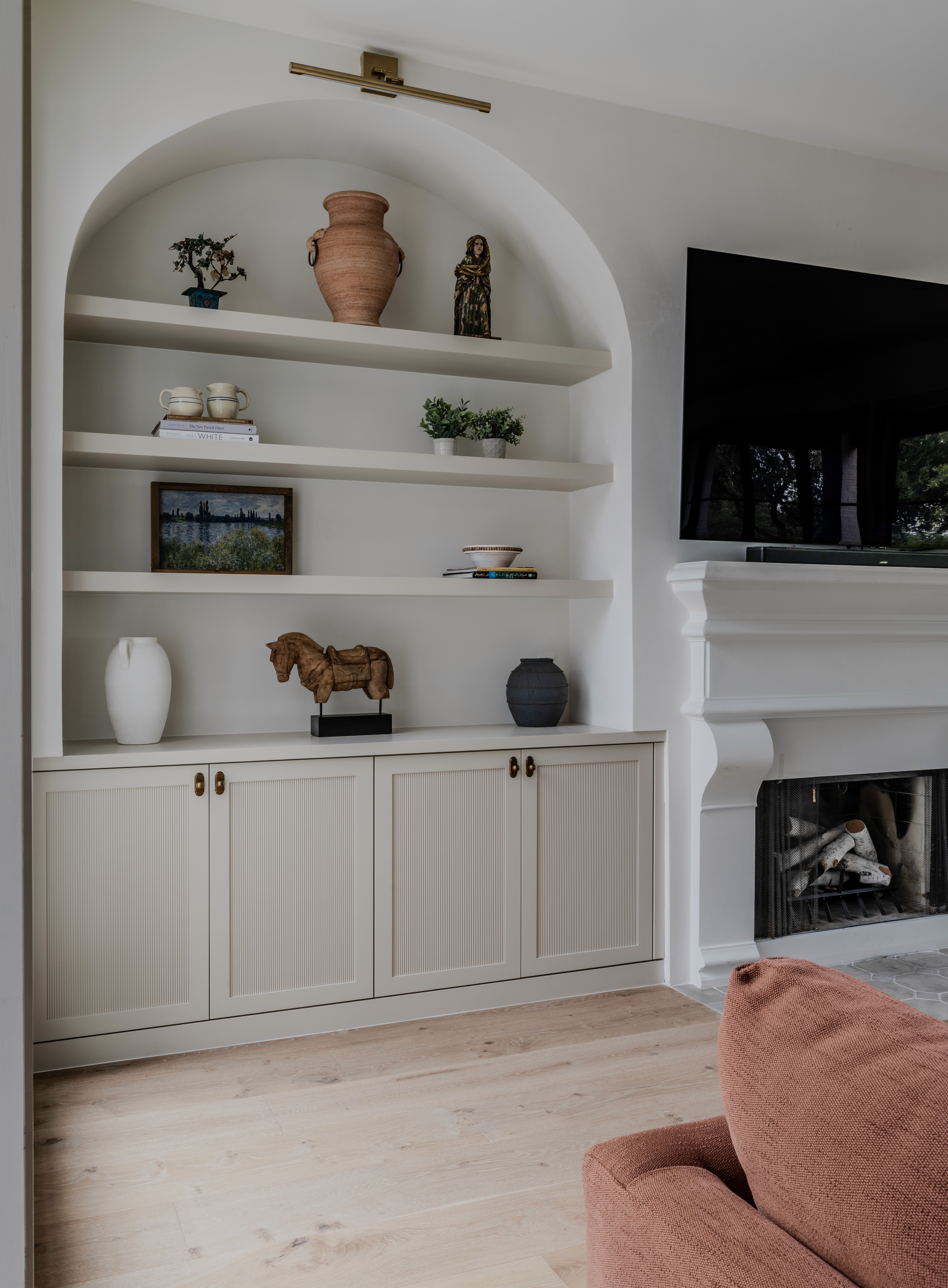

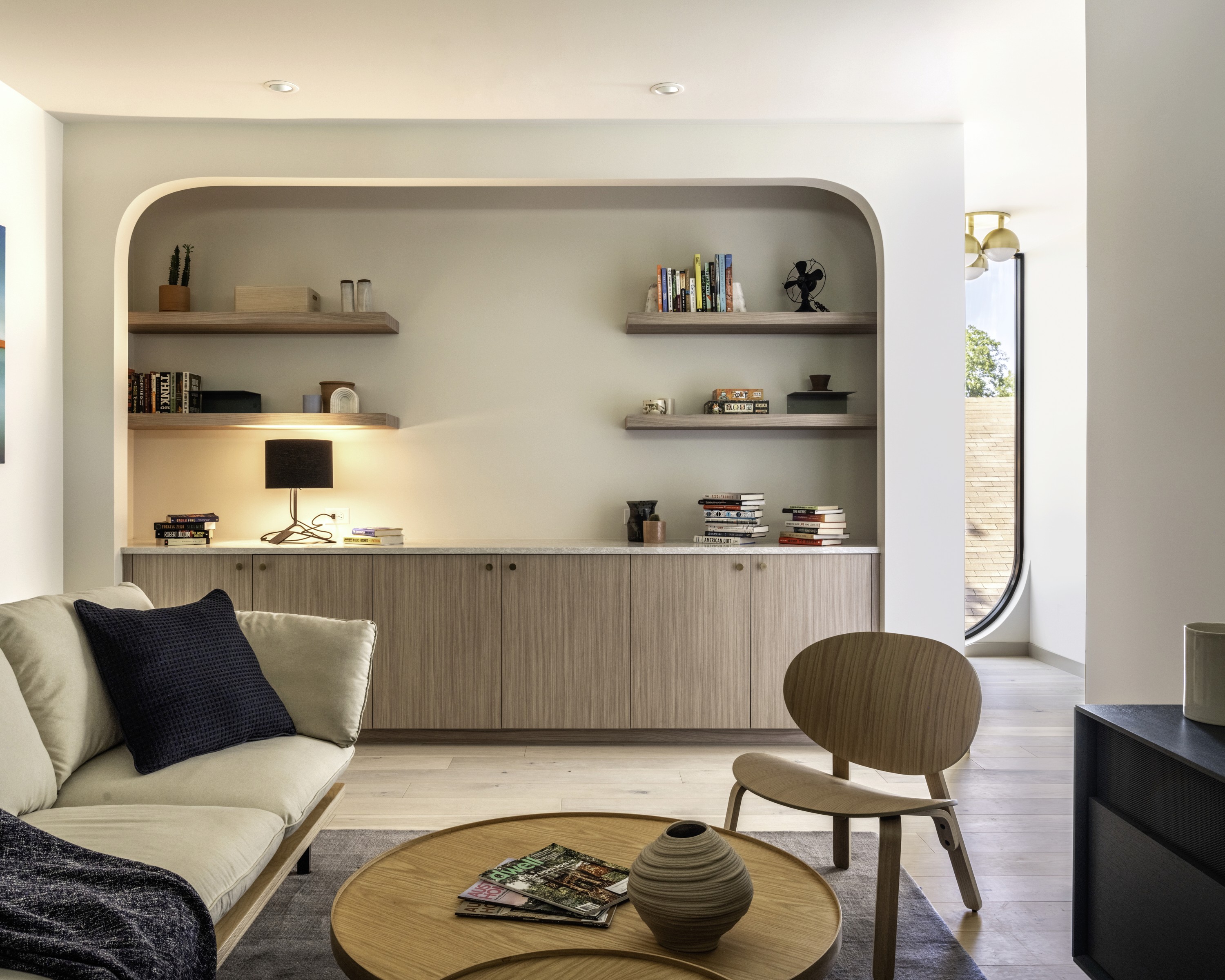
Built-in bookshelves can give an empty wall structure and help a living room, library, office, or quiet corner feel complete.
The difference between shelving that feels integrated and shelving that feels added later usually comes down to proportion.
Shelf thickness, spacing, cabinet depth, trim, and alignment with nearby doors or windows all affect the final result. A built-in that responds to the architecture of the room will feel more natural than one designed as a separate piece of furniture.
Open shelves can display books, artwork, photographs, and collected pieces. Lower cabinets can conceal electronics, games, paperwork, and other items that do not need to remain visible.
That balance allows the room to feel personal without becoming visually crowded.
Integrated lighting can add warmth and depth, particularly in a room used during the evening. It highlights the shelving and makes the built-in part of the overall lighting plan rather than treating it as storage alone.
A built-in does not always need to cover the entire wall. Leaving some open wall space can prevent the design from feeling heavy and give the displayed objects room to breathe.
Adjustable shelving is another useful detail. Collections and storage needs change over time, and the cabinetry should be able to change with them.
The finished built-in should feel settled within the room, even as the books, objects, and photographs displayed inside it continue to evolve.
Built-in bookshelves can give an empty wall structure and help a living room, library, office, or quiet corner feel complete.
The difference between shelving that feels integrated and shelving that feels added later usually comes down to proportion.
Shelf thickness, spacing, cabinet depth, trim, and alignment with nearby doors or windows all affect the final result. A built-in that responds to the architecture of the room will feel more natural than one designed as a separate piece of furniture.
Open shelves can display books, artwork, photographs, and collected pieces. Lower cabinets can conceal electronics, games, paperwork, and other items that do not need to remain visible.
That balance allows the room to feel personal without becoming visually crowded.
Integrated lighting can add warmth and depth, particularly in a room used during the evening. It highlights the shelving and makes the built-in part of the overall lighting plan rather than treating it as storage alone.
A built-in does not always need to cover the entire wall. Leaving some open wall space can prevent the design from feeling heavy and give the displayed objects room to breathe.
Adjustable shelving is another useful detail. Collections and storage needs change over time, and the cabinetry should be able to change with them.
The finished built-in should feel settled within the room, even as the books, objects, and photographs displayed inside it continue to evolve.
Can a Small Area Become a Functional Home Bar?
Can a Small Area Become a Functional Home Bar?

A home bar does not require its own room.
It can fit along a dining room wall, inside an alcove, near the kitchen, or as part of a larger living room built-in. Even a narrow section of cabinetry can provide useful storage and serving space when it is planned carefully.
The design should begin with how the area will actually be used.
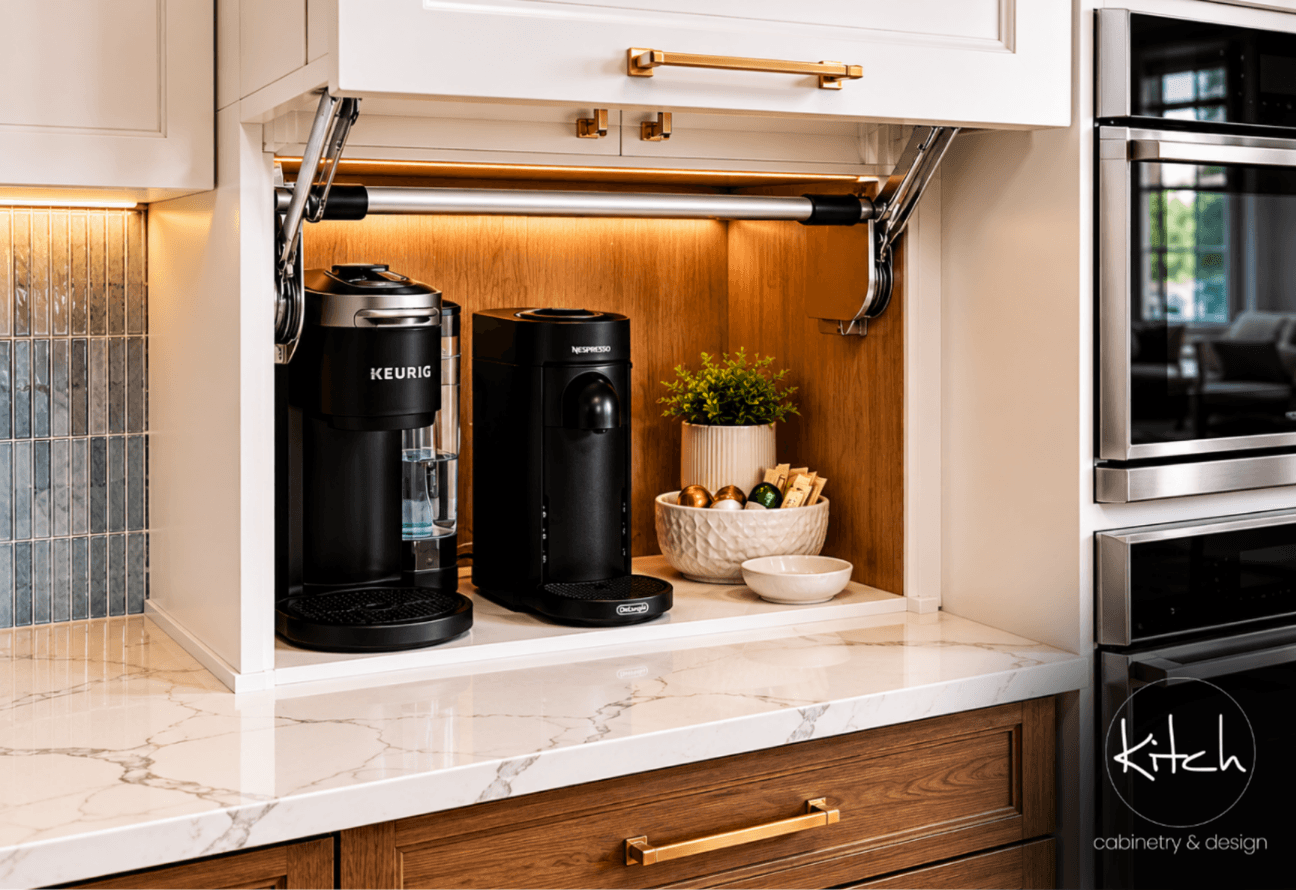
Some households need storage for wine, spirits, and glassware. Others want a coffee station that can also function as a bar when entertaining. The intended use will determine whether the space needs refrigeration, bottle storage, drawers, closed cabinets, open shelving, or additional countertop space.
Because a bar usually occupies a smaller area, it can also support a more expressive design choice.
A deeper cabinet color, natural wood finish, glass-front doors, decorative hardware, or distinctive countertop can give the bar its own character. The design can feel different from the kitchen without looking disconnected from the rest of the home.
Repeating one nearby material often helps create that connection. The hardware might relate to the kitchen. The cabinet color might pick up a tone from the surrounding furniture. A wood finish might connect to the flooring or dining table.
The repetition does not need to be exact. It simply needs to make the bar feel intentional.
A small bar area should feel like a natural part of the room rather than a separate feature placed into an available corner.
A home bar does not require its own room.
It can fit along a dining room wall, inside an alcove, near the kitchen, or as part of a larger living room built-in. Even a narrow section of cabinetry can provide useful storage and serving space when it is planned carefully.
The design should begin with how the area will actually be used.
Some households need storage for wine, spirits, and glassware. Others want a coffee station that can also function as a bar when entertaining. The intended use will determine whether the space needs refrigeration, bottle storage, drawers, closed cabinets, open shelving, or additional countertop space.
Because a bar usually occupies a smaller area, it can also support a more expressive design choice.
A deeper cabinet color, natural wood finish, glass-front doors, decorative hardware, or distinctive countertop can give the bar its own character. The design can feel different from the kitchen without looking disconnected from the rest of the home.
Repeating one nearby material often helps create that connection. The hardware might relate to the kitchen. The cabinet color might pick up a tone from the surrounding furniture. A wood finish might connect to the flooring or dining table.
The repetition does not need to be exact. It simply needs to make the bar feel intentional.
A small bar area should feel like a natural part of the room rather than a separate feature placed into an available corner.
Let Each Space Have Its Own Character
Let Each Space Have Its Own Character

The smaller spaces in a home do not need to copy the kitchen exactly. A mudroom may call for a more durable finish. A library can feel warmer and more layered. A bar might be the right place for a deeper color, distinctive hardware, or a material with a little more personality.
What makes these spaces feel connected is not perfect matching. It is the quieter details: cabinetry proportions that feel consistent, finishes that relate to one another, and hardware or lighting that carries a familiar tone from room to room.
The architecture matters, too. A built-in feels more natural when its lines respond to the space around it—aligning with nearby doors, trim, ceiling heights, or existing cabinetry. Those small decisions help the piece feel as though it has always belonged there, while still giving the room a character of its own.
The smaller spaces in a home do not need to copy the kitchen exactly. A mudroom may call for a more durable finish. A library can feel warmer and more layered. A bar might be the right place for a deeper color, distinctive hardware, or a material with a little more personality.
What makes these spaces feel connected is not perfect matching. It is the quieter details: cabinetry proportions that feel consistent, finishes that relate to one another, and hardware or lighting that carries a familiar tone from room to room.
The architecture matters, too. A built-in feels more natural when its lines respond to the space around it—aligning with nearby doors, trim, ceiling heights, or existing cabinetry. Those small decisions help the piece feel as though it has always belonged there, while still giving the room a character of its own.
Look Again at the Spaces You Already Have
Look Again at the Spaces You Already Have
The next meaningful space in your home may not require adding another room. It may begin with a wall, corner, or entry that has never quite worked the way you need it to. Thoughtful cabinetry can give that space a purpose while helping the entire home feel more complete.
The next meaningful space in your home may not require adding another room. It may begin with a wall, corner, or entry that has never quite worked the way you need it to. Thoughtful cabinetry can give that space a purpose while helping the entire home feel more complete.

Kitch is a husband and wife team who have worked together for 23 years. They thrive on pairing with interior designers, local builders and the general public to create exciting and inspiring spaces. With an intimate but amazing showroom, it is perfect for a personable design experience.
Kitch is a husband and wife team who have worked together for 23 years. They thrive on pairing with interior designers, local builders and the general public to create exciting and inspiring spaces. With an intimate but amazing showroom, it is perfect for a personable design experience.
Recent posts
Latest Project
Step Into Our Showroom
Step Into Our Showroom
Step Into Our Showroom
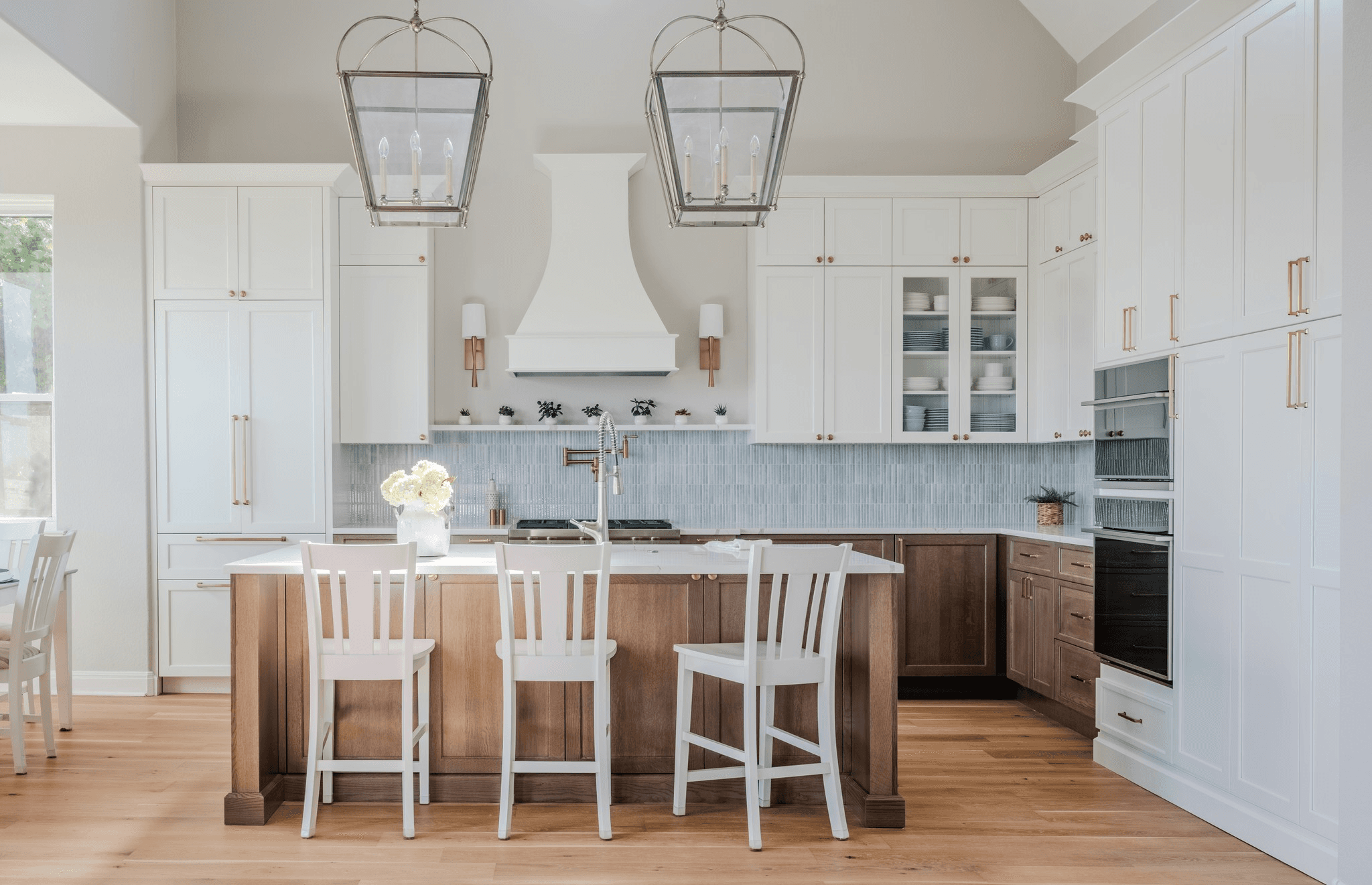
At Kitch Cabinetry, our showroom is a hands-on space to explore styles, materials, and finishes—showcasing the quality and care behind every project.
At Kitch Cabinetry, our showroom is a hands-on space to explore styles, materials, and finishes—showcasing the quality and care behind every project.


Stay Updated with Our Latest Insights
Stay Updated with Our Latest Insights
Stay Updated with Our Latest Insights

Oct 14, 2026
Thanksgiving brings everyone into the kitchen. From spacious islands to custom cabinetry, thoughtful design makes hosting easier and gatherings more memorable. Explore kitchen ideas that Austin homeowners can enjoy during the holidays and beyond.

Sep 25, 2026
The most expensive kitchen remodeling mistakes are often the ones you do not notice until the kitchen is finished. Poor outlet placement, tight walkways, awkward appliance clearances, and the wrong storage can turn a beautiful kitchen into a daily frustration. Here are seven planning mistakes worth catching before they become costly to fix.

Aug 6, 2026
Open shelves can make a kitchen feel lighter, but living with them is not always as effortless as the finished photos suggest. Traditional upper cabinets solve the storage problem, yet a long wall of solid doors can sometimes make a kitchen feel heavier than it needs to.

Jul 8, 2026
Homeowners planning a kitchen remodel who want help choosing kitchen colors, finishes, and accents without making the space feel cluttered or visually overwhelming