Cabinetry & Storage
Kitch Editorial Team
Rethinking Upper Kitchen Cabinets: A Lighter Alternative to Open Shelves
Rethinking Upper Kitchen Cabinets: A Lighter Alternative to Open Shelves
For a long time, the conversation around upper kitchen cabinets has felt like a choice between two extremes. Keep a full wall of traditional upper cabinets and gain plenty of enclosed storage, but risk making the room feel visually heavy. Or remove them, add open shelves, and create a lighter look, knowing that everything you store there will stay on display. For many homeowners, neither option feels quite right. A kitchen still needs practical storage. It also needs room to breathe. That is where a hybrid micro-shaker upper can offer a more balanced approach. With a slimmer cabinet profile, lighter framing, and the option for glass or shallow recessed details, it keeps everyday items behind doors without giving the upper wall the same solid weight as traditional cabinetry.
For a long time, the conversation around upper kitchen cabinets has felt like a choice between two extremes. Keep a full wall of traditional upper cabinets and gain plenty of enclosed storage, but risk making the room feel visually heavy. Or remove them, add open shelves, and create a lighter look, knowing that everything you store there will stay on display. For many homeowners, neither option feels quite right. A kitchen still needs practical storage. It also needs room to breathe. That is where a hybrid micro-shaker upper can offer a more balanced approach. With a slimmer cabinet profile, lighter framing, and the option for glass or shallow recessed details, it keeps everyday items behind doors without giving the upper wall the same solid weight as traditional cabinetry.
For a long time, the conversation around upper kitchen cabinets has felt like a choice between two extremes. Keep a full wall of traditional upper cabinets and gain plenty of enclosed storage, but risk making the room feel visually heavy. Or remove them, add open shelves, and create a lighter look, knowing that everything you store there will stay on display. For many homeowners, neither option feels quite right. A kitchen still needs practical storage. It also needs room to breathe. That is where a hybrid micro-shaker upper can offer a more balanced approach. With a slimmer cabinet profile, lighter framing, and the option for glass or shallow recessed details, it keeps everyday items behind doors without giving the upper wall the same solid weight as traditional cabinetry.
Are Open Shelves in the Kitchen Actually Practical?
Are Open Shelves in the Kitchen Actually Practical?

Open shelves can work beautifully in the right kitchen. They keep frequently used pieces within reach, break up a wall of cabinetry, and give the room a relaxed, collected feeling. But they also ask more from the homeowner. Everything is visible, from the everyday coffee mugs to the stack of bowls that never sits quite straight. In a working kitchen, exposed shelves also need regular wiping and dusting, particularly when they are close to cooking areas. Current design coverage has increasingly pointed to glass-front cabinetry as a lower-maintenance alternative that still brings some of the visual openness homeowners like about shelving. Fully enclosed upper cabinets solve that problem, but covering an entire wall with solid doors can create a different issue. In a smaller kitchen, or one with limited natural light, too much upper cabinetry can make the room feel more enclosed. Kitch has explored this same idea before: sometimes the better design decision is not adding as much cabinetry as possible, but deciding where the room needs storage and where it needs visual relief. The answer does not have to be removing the upper cabinets completely. It can be changing how those cabinets look and feel.
Open shelves can work beautifully in the right kitchen. They keep frequently used pieces within reach, break up a wall of cabinetry, and give the room a relaxed, collected feeling. But they also ask more from the homeowner. Everything is visible, from the everyday coffee mugs to the stack of bowls that never sits quite straight. In a working kitchen, exposed shelves also need regular wiping and dusting, particularly when they are close to cooking areas. Current design coverage has increasingly pointed to glass-front cabinetry as a lower-maintenance alternative that still brings some of the visual openness homeowners like about shelving. Fully enclosed upper cabinets solve that problem, but covering an entire wall with solid doors can create a different issue. In a smaller kitchen, or one with limited natural light, too much upper cabinetry can make the room feel more enclosed. Kitch has explored this same idea before: sometimes the better design decision is not adding as much cabinetry as possible, but deciding where the room needs storage and where it needs visual relief. The answer does not have to be removing the upper cabinets completely. It can be changing how those cabinets look and feel.
Open shelves can work beautifully in the right kitchen. They keep frequently used pieces within reach, break up a wall of cabinetry, and give the room a relaxed, collected feeling. But they also ask more from the homeowner. Everything is visible, from the everyday coffee mugs to the stack of bowls that never sits quite straight. In a working kitchen, exposed shelves also need regular wiping and dusting, particularly when they are close to cooking areas. Current design coverage has increasingly pointed to glass-front cabinetry as a lower-maintenance alternative that still brings some of the visual openness homeowners like about shelving. Fully enclosed upper cabinets solve that problem, but covering an entire wall with solid doors can create a different issue. In a smaller kitchen, or one with limited natural light, too much upper cabinetry can make the room feel more enclosed. Kitch has explored this same idea before: sometimes the better design decision is not adding as much cabinetry as possible, but deciding where the room needs storage and where it needs visual relief. The answer does not have to be removing the upper cabinets completely. It can be changing how those cabinets look and feel.
The Middle Ground: A Hybrid Micro-Shaker Upper
The Middle Ground: A Hybrid Micro-Shaker Upper

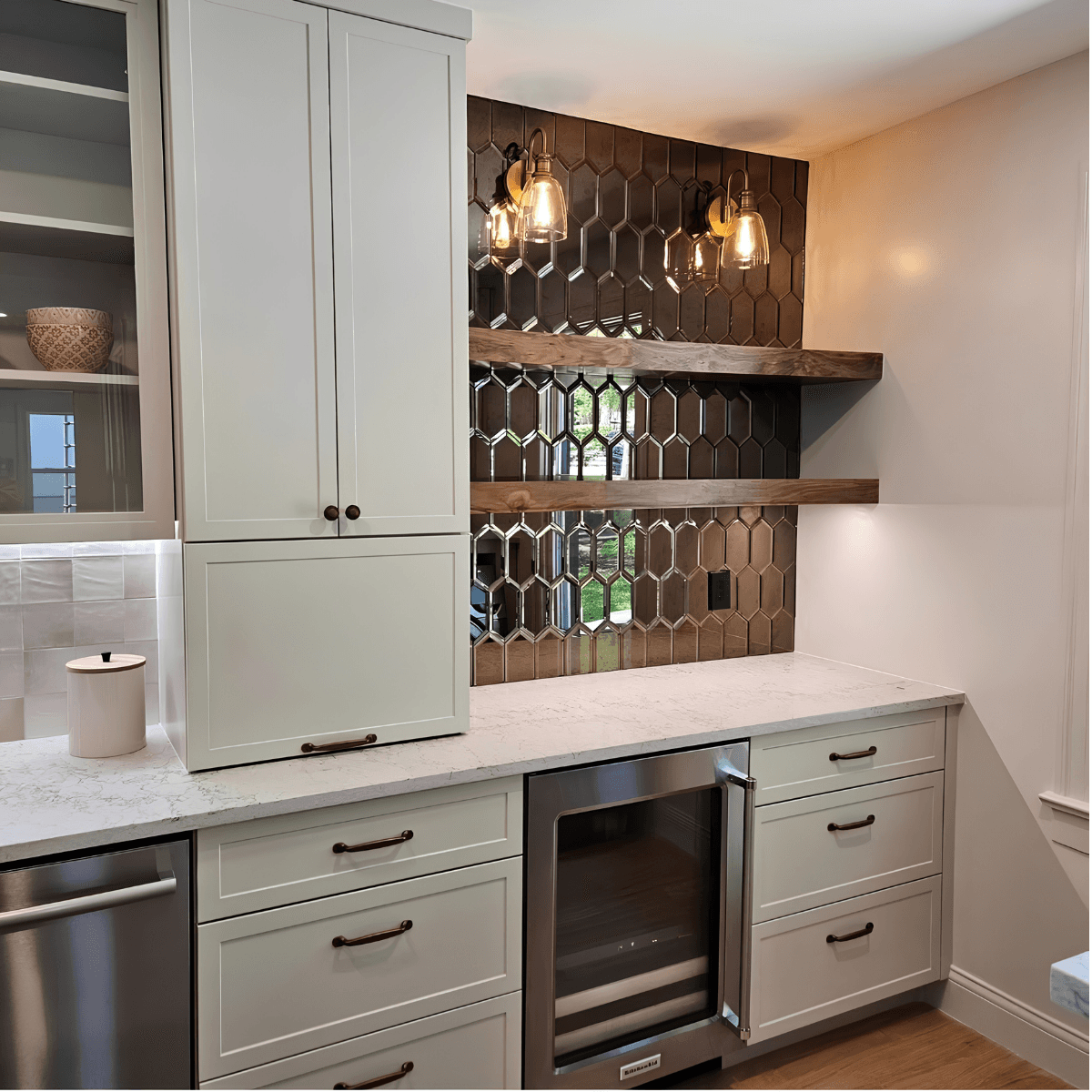

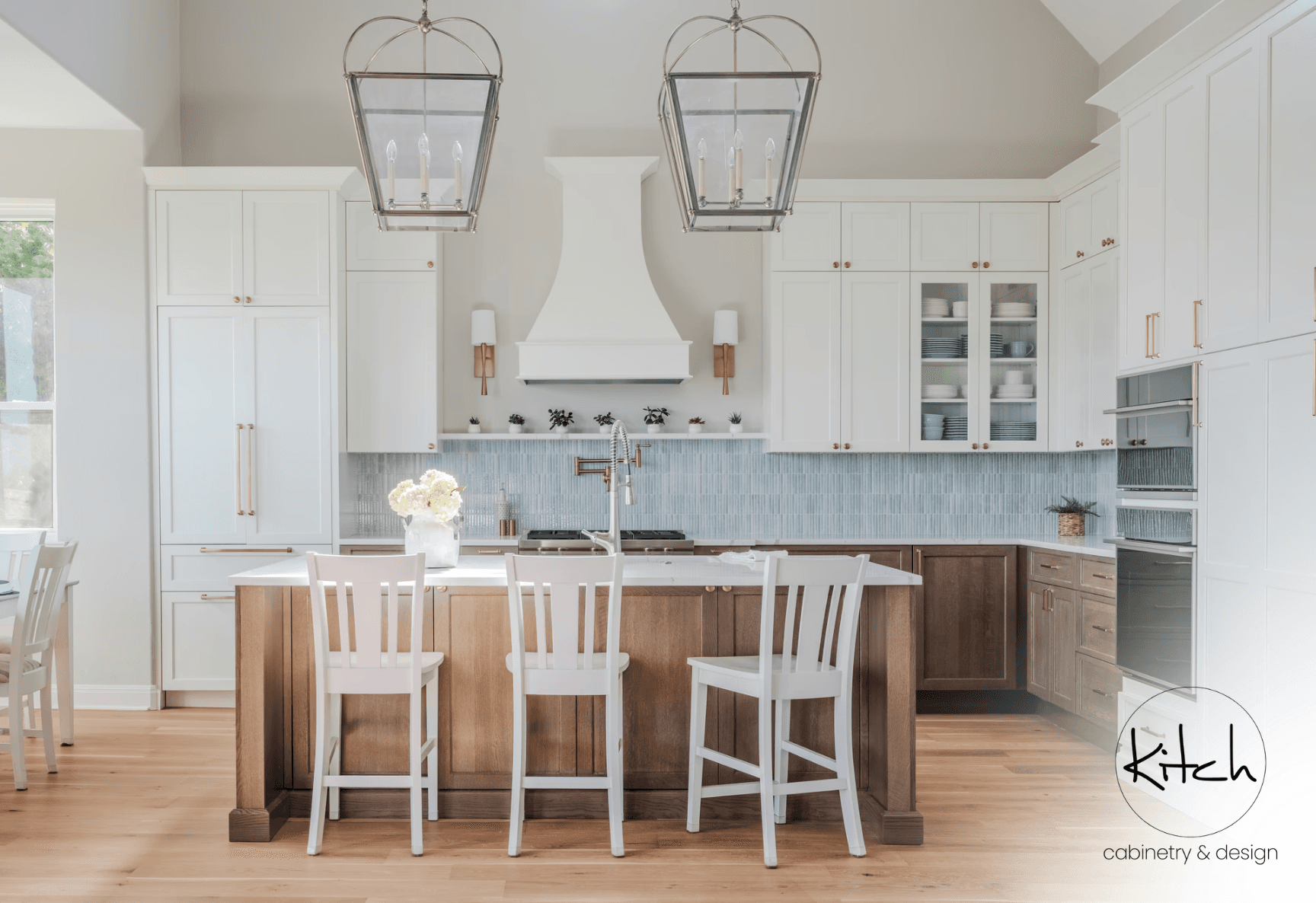
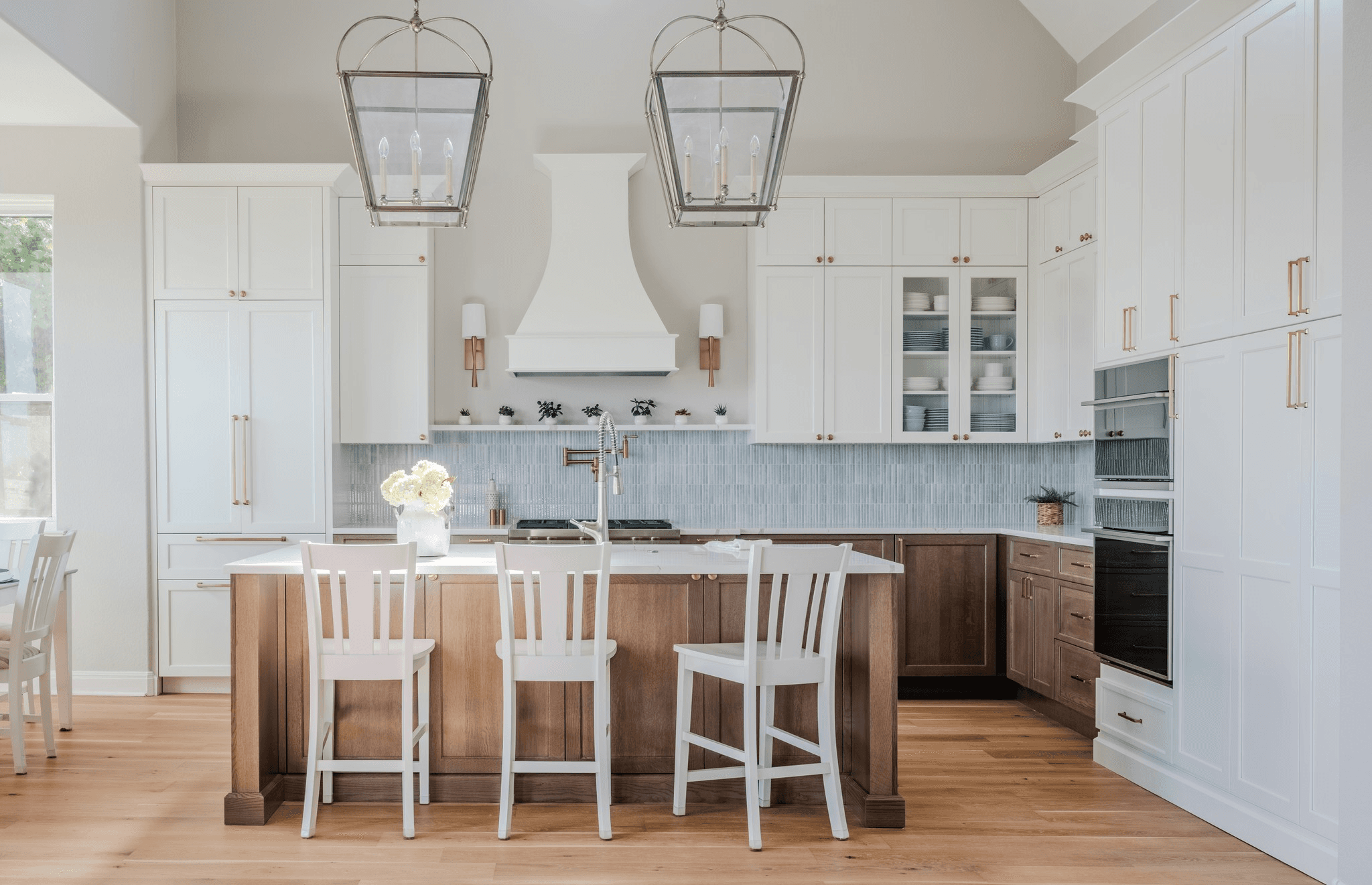
Think of the hybrid micro-shaker upper as a quieter version of a traditional wall cabinet. The familiar Shaker idea is still there, but the frame becomes much slimmer. Micro-shaker cabinetry uses a narrower interpretation of the classic Shaker profile, giving the door a cleaner, more contemporary presence. From there, glass can replace part of the solid center panel, or a shallow recessed detail can create additional depth without adding visual bulk. The cabinet is still closed. Plates, glasses, pantry items, and the less-than-perfect parts of everyday kitchen life still have a place to go. What changes is how much visual weight the cabinetry carries. Clear glass can make the upper wall feel especially open and is useful when the contents are pieces you enjoy seeing. Reeded or textured glass offers more privacy while still allowing light and movement through the cabinet front. A solid micro-shaker door can also be mixed into the same run where more concealment is useful. That combination is what makes the idea flexible. You are not choosing between displaying everything and hiding everything. You can decide which parts of the kitchen should feel open, which should feel quiet, and where each approach makes the most sense.
Think of the hybrid micro-shaker upper as a quieter version of a traditional wall cabinet. The familiar Shaker idea is still there, but the frame becomes much slimmer. Micro-shaker cabinetry uses a narrower interpretation of the classic Shaker profile, giving the door a cleaner, more contemporary presence. From there, glass can replace part of the solid center panel, or a shallow recessed detail can create additional depth without adding visual bulk. The cabinet is still closed. Plates, glasses, pantry items, and the less-than-perfect parts of everyday kitchen life still have a place to go. What changes is how much visual weight the cabinetry carries. Clear glass can make the upper wall feel especially open and is useful when the contents are pieces you enjoy seeing. Reeded or textured glass offers more privacy while still allowing light and movement through the cabinet front. A solid micro-shaker door can also be mixed into the same run where more concealment is useful. That combination is what makes the idea flexible. You are not choosing between displaying everything and hiding everything. You can decide which parts of the kitchen should feel open, which should feel quiet, and where each approach makes the most sense.
Think of the hybrid micro-shaker upper as a quieter version of a traditional wall cabinet. The familiar Shaker idea is still there, but the frame becomes much slimmer. Micro-shaker cabinetry uses a narrower interpretation of the classic Shaker profile, giving the door a cleaner, more contemporary presence. From there, glass can replace part of the solid center panel, or a shallow recessed detail can create additional depth without adding visual bulk. The cabinet is still closed. Plates, glasses, pantry items, and the less-than-perfect parts of everyday kitchen life still have a place to go. What changes is how much visual weight the cabinetry carries. Clear glass can make the upper wall feel especially open and is useful when the contents are pieces you enjoy seeing. Reeded or textured glass offers more privacy while still allowing light and movement through the cabinet front. A solid micro-shaker door can also be mixed into the same run where more concealment is useful. That combination is what makes the idea flexible. You are not choosing between displaying everything and hiding everything. You can decide which parts of the kitchen should feel open, which should feel quiet, and where each approach makes the most sense.
Why Lighter Upper Cabinets Can Change the Whole Kitchen
Why Lighter Upper Cabinets Can Change the Whole Kitchen

Upper cabinets sit close to eye level, so even a small change in their proportions can have a noticeable effect on how a kitchen feels. Slimmer framing allows more of the door panel or glass to show. Glass introduces depth instead of stopping the eye at a solid surface. A thoughtfully placed break between cabinets can give a window, range hood, backsplash, or architectural detail more room to stand on its own. The kitchen can still have substantial storage without looking as though every available inch of wall has been filled. This can be especially useful when the lower cabinetry, island, countertops, or flooring already carry a strong material presence. Instead of asking the upper elements of you kitchen to compete with everything below, a lighter treatment lets them settle into the background. The result is not an empty kitchen. It is a kitchen with better visual balance. That distinction matters. A room can have plenty happening in it and still feel calm when each element is given the right amount of visual weight.
Upper cabinets sit close to eye level, so even a small change in their proportions can have a noticeable effect on how a kitchen feels. Slimmer framing allows more of the door panel or glass to show. Glass introduces depth instead of stopping the eye at a solid surface. A thoughtfully placed break between cabinets can give a window, range hood, backsplash, or architectural detail more room to stand on its own. The kitchen can still have substantial storage without looking as though every available inch of wall has been filled. This can be especially useful when the lower cabinetry, island, countertops, or flooring already carry a strong material presence. Instead of asking the upper elements of you kitchen to compete with everything below, a lighter treatment lets them settle into the background. The result is not an empty kitchen. It is a kitchen with better visual balance. That distinction matters. A room can have plenty happening in it and still feel calm when each element is given the right amount of visual weight.
Upper cabinets sit close to eye level, so even a small change in their proportions can have a noticeable effect on how a kitchen feels. Slimmer framing allows more of the door panel or glass to show. Glass introduces depth instead of stopping the eye at a solid surface. A thoughtfully placed break between cabinets can give a window, range hood, backsplash, or architectural detail more room to stand on its own. The kitchen can still have substantial storage without looking as though every available inch of wall has been filled. This can be especially useful when the lower cabinetry, island, countertops, or flooring already carry a strong material presence. Instead of asking the upper elements of you kitchen to compete with everything below, a lighter treatment lets them settle into the background. The result is not an empty kitchen. It is a kitchen with better visual balance. That distinction matters. A room can have plenty happening in it and still feel calm when each element is given the right amount of visual weight.
How to Make the Hybrid Look Feel Intentional
How to Make the Hybrid Look Feel Intentional

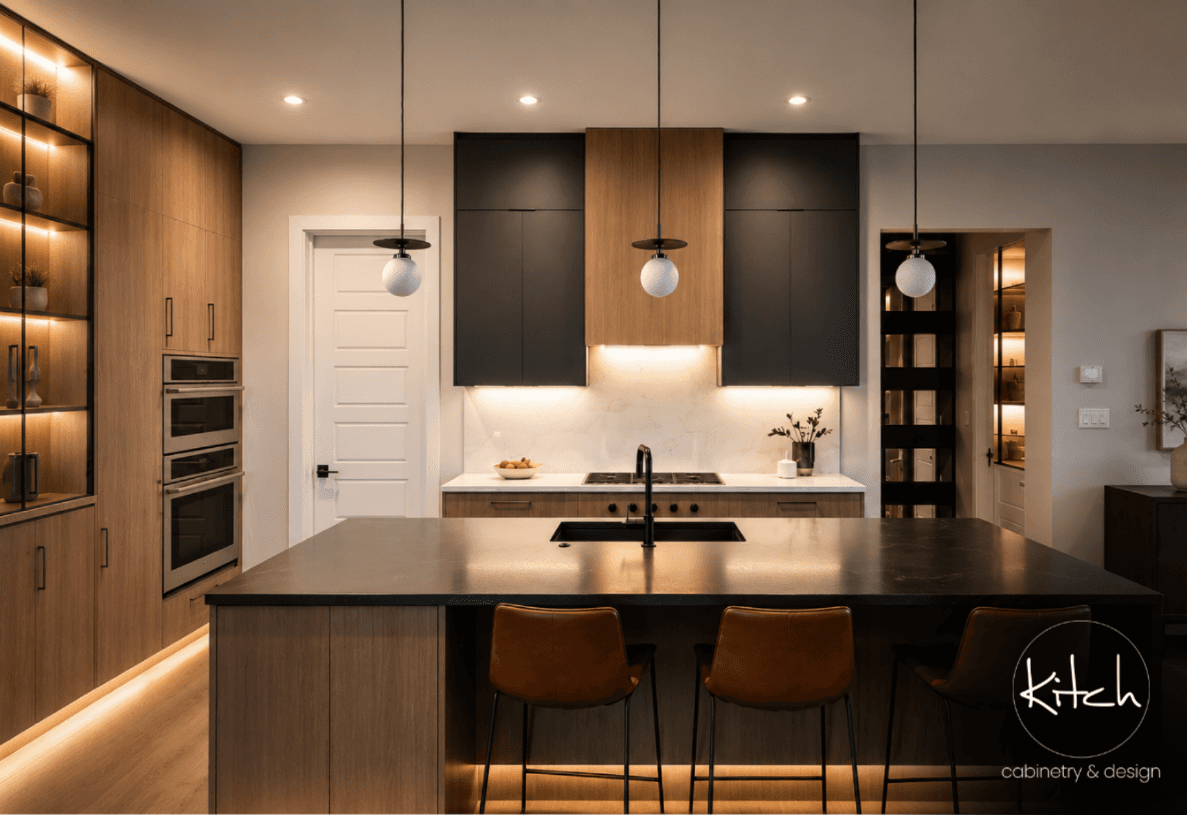
The success of a lighter upper cabinet is in the details. Start with proportion. A very slim frame naturally feels quieter than a wide traditional Shaker profile, but it still needs to make sense beside the rest of the cabinetry. The lower cabinets can carry a slightly stronger profile while the upper cabinets become lighter, as long as the two feel related rather than disconnected. Then consider what will actually sit behind the doors. Clear glass works beautifully for glassware, ceramics, and the pieces you naturally keep organized. If you want more forgiveness, textured or reeded glass can soften what is visible while preserving the lighter effect. Finish and hardware can help tie the whole kitchen together. The upper cabinets can match the color of the rest of the kitchen or use a complementary wood tone for contrast. Simple hardware works best because it keeps the slimmer cabinet doors looking clean and balanced. Lighting adds another layer. Interior cabinet lighting can give glass-front upper cabinets a soft glow in the evening, while under-cabinet lighting keeps the countertop useful and makes the upper cabinetry feel less dense. None of these details needs to call attention to itself. The goal is for the upper wall to feel resolved, useful, and lighter than a traditional bank of cabinets without becoming purely decorative.
The success of a lighter upper cabinet is in the details. Start with proportion. A very slim frame naturally feels quieter than a wide traditional Shaker profile, but it still needs to make sense beside the rest of the cabinetry. The lower cabinets can carry a slightly stronger profile while the upper cabinets become lighter, as long as the two feel related rather than disconnected. Then consider what will actually sit behind the doors. Clear glass works beautifully for glassware, ceramics, and the pieces you naturally keep organized. If you want more forgiveness, textured or reeded glass can soften what is visible while preserving the lighter effect. Finish and hardware can help tie the whole kitchen together. The upper cabinets can match the color of the rest of the kitchen or use a complementary wood tone for contrast. Simple hardware works best because it keeps the slimmer cabinet doors looking clean and balanced. Lighting adds another layer. Interior cabinet lighting can give glass-front upper cabinets a soft glow in the evening, while under-cabinet lighting keeps the countertop useful and makes the upper cabinetry feel less dense. None of these details needs to call attention to itself. The goal is for the upper wall to feel resolved, useful, and lighter than a traditional bank of cabinets without becoming purely decorative.
The success of a lighter upper cabinet is in the details. Start with proportion. A very slim frame naturally feels quieter than a wide traditional Shaker profile, but it still needs to make sense beside the rest of the cabinetry. The lower cabinets can carry a slightly stronger profile while the upper cabinets become lighter, as long as the two feel related rather than disconnected. Then consider what will actually sit behind the doors. Clear glass works beautifully for glassware, ceramics, and the pieces you naturally keep organized. If you want more forgiveness, textured or reeded glass can soften what is visible while preserving the lighter effect. Finish and hardware can help tie the whole kitchen together. The upper cabinets can match the color of the rest of the kitchen or use a complementary wood tone for contrast. Simple hardware works best because it keeps the slimmer cabinet doors looking clean and balanced. Lighting adds another layer. Interior cabinet lighting can give glass-front upper cabinets a soft glow in the evening, while under-cabinet lighting keeps the countertop useful and makes the upper cabinetry feel less dense. None of these details needs to call attention to itself. The goal is for the upper wall to feel resolved, useful, and lighter than a traditional bank of cabinets without becoming purely decorative.
Your Upper Cabinets Do Not Have to Be All or Nothing
Your Upper Cabinets Do Not Have to Be All or Nothing
A kitchen can feel open without giving up the storage that makes everyday life easier. Sometimes the right answer is a full upper cabinet. Sometimes it is an open section. And sometimes it is something in between, with slimmer framing, glass, and thoughtful proportions creating a little more breathing room. If you are planning a kitchen in Austin, Kitch can help you look at the upper wall as part of the whole room, considering what you need to store, what you want to see, and how the cabinetry can support both without making the space feel heavier than it needs to.
A kitchen can feel open without giving up the storage that makes everyday life easier. Sometimes the right answer is a full upper cabinet. Sometimes it is an open section. And sometimes it is something in between, with slimmer framing, glass, and thoughtful proportions creating a little more breathing room. If you are planning a kitchen in Austin, Kitch can help you look at the upper wall as part of the whole room, considering what you need to store, what you want to see, and how the cabinetry can support both without making the space feel heavier than it needs to.
A kitchen can feel open without giving up the storage that makes everyday life easier. Sometimes the right answer is a full upper cabinet. Sometimes it is an open section. And sometimes it is something in between, with slimmer framing, glass, and thoughtful proportions creating a little more breathing room. If you are planning a kitchen in Austin, Kitch can help you look at the upper wall as part of the whole room, considering what you need to store, what you want to see, and how the cabinetry can support both without making the space feel heavier than it needs to.

Kitch is a husband and wife team who have worked together for 23 years. They thrive on pairing with interior designers, local builders and the general public to create exciting and inspiring spaces. With an intimate but amazing showroom, it is perfect for a personable design experience.
Kitch is a husband and wife team who have worked together for 23 years. They thrive on pairing with interior designers, local builders and the general public to create exciting and inspiring spaces. With an intimate but amazing showroom, it is perfect for a personable design experience.
Recent posts
Latest Project
Step Into Our Showroom
Step Into Our Showroom
Step Into Our Showroom
At Kitch Cabinetry, our showroom is a hands-on space to explore styles, materials, and finishes—showcasing the quality and care behind every project.
At Kitch Cabinetry, our showroom is a hands-on space to explore styles, materials, and finishes—showcasing the quality and care behind every project.


Stay Updated with Our Latest Insights
Stay Updated with Our Latest Insights
Stay Updated with Our Latest Insights

Sep 25, 2026
The most expensive kitchen remodeling mistakes are often the ones you do not notice until the kitchen is finished. Poor outlet placement, tight walkways, awkward appliance clearances, and the wrong storage can turn a beautiful kitchen into a daily frustration. Here are seven planning mistakes worth catching before they become costly to fix.

Jul 20, 2026
These built-in ideas show how thoughtful cabinetry can turn overlooked corners into spaces that feel organized, personal, and connected to everyday life.

Jul 8, 2026
Homeowners planning a kitchen remodel who want help choosing kitchen colors, finishes, and accents without making the space feel cluttered or visually overwhelming
Jun 8, 2026
A kitchen that stands the test of time starts with the right cabinetry. Discover the design choices that can improve daily life today while helping your kitchen stay functional, beautiful, and relevant for years to come.